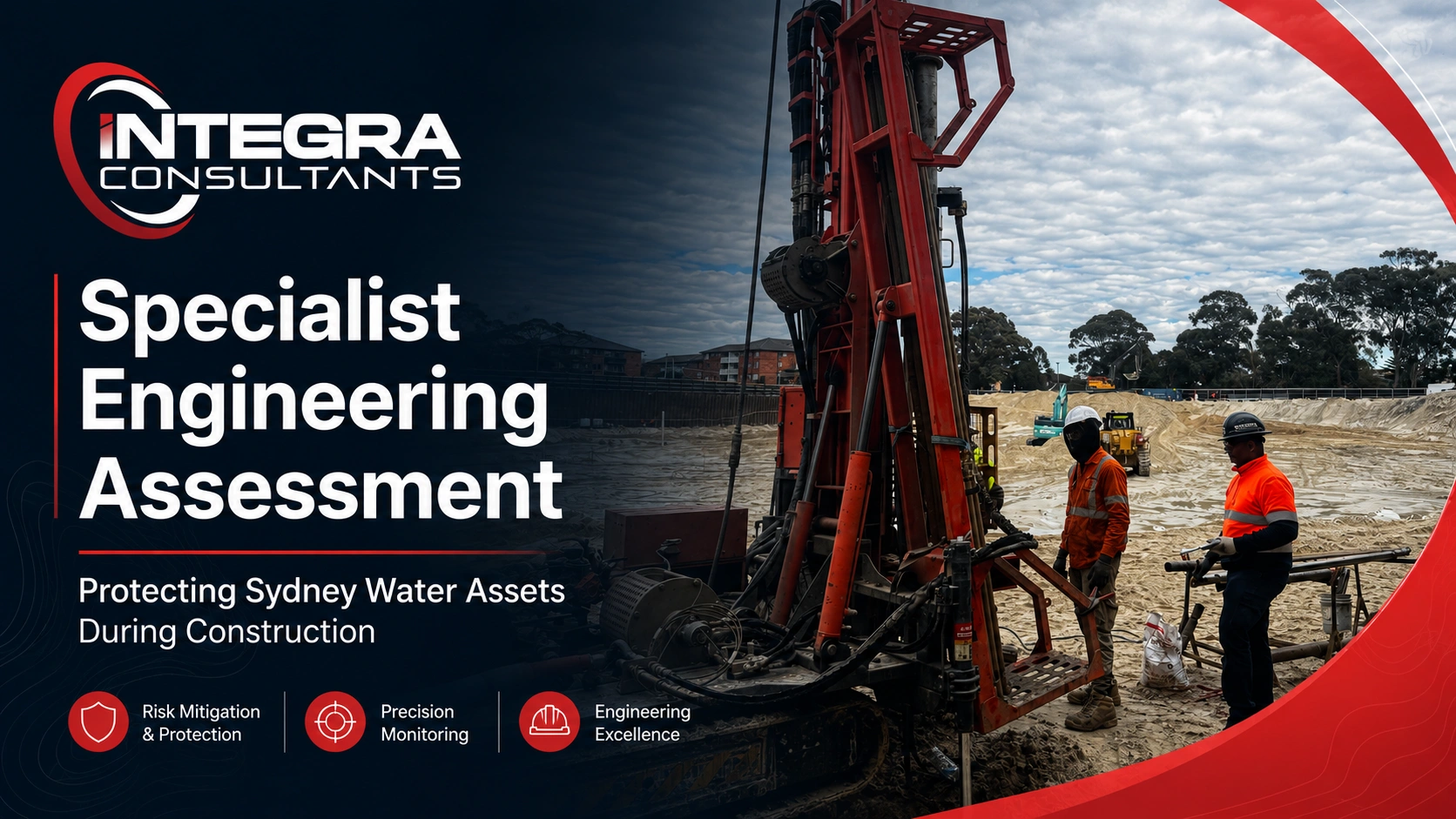
A Specialized Engineering Assessment helps identify, analyse and manage the impact of construction work near Sydney Water assets. It is commonly needed when excavation, dewatering, piling, shoring, foundation loads or ground movement may affect nearby water, wastewater or stormwater infrastructure.
For Sydney and NSW developments, construction does not always need to directly touch a pipe or asset to create risk. Deep excavation can cause lateral ground movement. Dewatering can change groundwater conditions. Heavy plant, crane loads, piling and vibration can influence the soil around buried infrastructure. Because of this, a Specialized Engineering Assessment provides a structured engineering review before construction begins.
Integra Consultants provides Specialist Engineering Assessment for Sydney Water Assets for developers, builders, consultants and project teams that need practical, approval-ready engineering support.
What Is a Specialized Engineering Assessment?
A Specialized Engineering Assessment is a technical engineering review that evaluates how proposed construction may affect nearby infrastructure assets. In the Sydney Water context, this service is commonly known as a Specialist Engineering Assessment, or SEA.
The assessment considers the proposed development, nearby Sydney Water assets, ground conditions, structural loads, groundwater behaviour, excavation methods and construction stages. The purpose is to determine whether the asset could be affected and what engineering controls are required to protect it.
In simple terms, a Specialized Engineering Assessment answers this question:
Will the proposed construction create unacceptable risk to a Sydney Water asset, and what must be done to manage that risk?
This makes the SEA more focused than a general geotechnical report. A normal geotechnical report may explain soil conditions and foundation options, but an SEA specifically connects those conditions to the protection of existing Sydney Water infrastructure.
For a broader overview of the process, you can also read Integra’s guide: A Practical Guide to Specialist Engineering Assessment SEA.
When Is a Specialized Engineering Assessment Needed?
A Specialized Engineering Assessment may be needed when construction activity falls within the zone of influence of a Sydney Water asset. The zone of influence is the area where loading, excavation, groundwater change or ground movement may affect the asset.
This requirement often appears during planning, design review, Sydney Water approval, development coordination or construction methodology assessment. It is especially important when a proposed development is located close to critical water, sewer, stormwater or wastewater infrastructure.
Common project situations where SEA may be required:
- Deep basement excavation close to Sydney Water assets
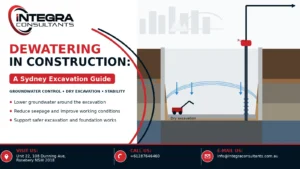
- Dewatering works that may change groundwater conditions
- Piling, anchoring or shoring near buried infrastructure
- Heavy crane, equipment or construction loading near assets
- Ground improvement, vibration or compaction works close to pipelines
- New building loads within the asset’s zone of influence
- Trenchless construction, boring or tunnelling near water infrastructure
- Projects involving critical assets or sensitive ground conditions
These situations do not automatically mean a project will be rejected. Instead, they show why the project needs engineering analysis. A well-prepared SEA can help demonstrate that risks have been identified, assessed and controlled.
Why Is a Specialized Engineering Assessment Important for Sydney Water Asset Protection?
A Specialized Engineering Assessment is important because Sydney Water assets are often located below or near active development sites. If construction affects those assets, the result may include service disruption, pipe movement, leakage, cracking, settlement, project delay or additional rectification cost.
The assessment provides an engineering basis for decision-making. It helps the project team understand whether the proposed work method is suitable, whether protective measures are required and whether monitoring should be installed during construction.
| SEA Concern | Why It Matters for Construction |
| Ground movement | Excavation or loading may cause soil displacement around existing assets. |
| Groundwater change | Dewatering can cause settlement or change support conditions around pipes. |
| Structural loading | New building or crane loads may increase stress near buried infrastructure. |
| Shoring behaviour | Temporary retention systems may move during excavation and affect nearby assets. |
| Vibration | Piling, compaction or rock breaking may affect sensitive infrastructure. |
| Asset condition | Older or critical assets may require more conservative assessment and protection. |
This table is useful because it shows that SEA is not only about one engineering issue. It connects geotechnical, structural and construction methodology risks into one asset-protection strategy.
How Is a Specialized Engineering Assessment Different From a Standard Geotechnical Report?
A standard geotechnical report usually focuses on the proposed development. It may provide information about soil profile, rock depth, groundwater, bearing capacity, settlement and foundation recommendations.
A Specialized Engineering Assessment goes further by asking how those same ground and construction conditions may affect an existing Sydney Water asset.
For example, a geotechnical report may say that basement excavation is possible with a shoring system. The SEA asks whether that excavation and shoring system may create unacceptable movement near a Sydney Water asset. It also considers whether monitoring, staging, redesign or additional protection is required.
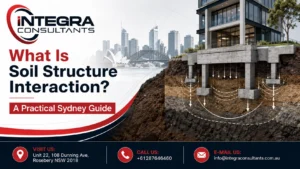
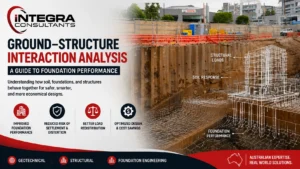
This is why SEA often needs input from civil, structural and geotechnical engineers. In complex projects, ground–structure interaction analyses may also be needed to understand how soil, structures, excavation and nearby assets behave together.
What Does a Strong Specialized Engineering Assessment Include?
A strong Specialized Engineering Assessment should be clear, evidence-based and practical. It should not only describe risk. It should explain how the risk will be managed during design and construction.
The assessment usually starts with information review. This may include project drawings, asset plans, survey information, geotechnical investigation data, excavation details, shoring design, foundation layout, loading assumptions and groundwater information.
Then the engineer assesses potential impacts. These may include settlement, lateral ground movement, stress change, vibration, groundwater drawdown and construction-stage effects. The assessment should also consider the condition and importance of the Sydney Water asset.
Where needed, the SEA may recommend protective measures. These may include revised excavation methodology, stiffer shoring, construction staging, monitoring points, trigger levels, contingency actions or changes to loading conditions.
For basement and excavation-heavy projects, Integra’s deep excavation, dewatering and shoring design service can directly support the SEA process.
How Does Construction Staging Affect SEA Outcomes?
Construction staging is one of the most important parts of a Specialized Engineering Assessment. Ground movement does not only occur when the final building is complete. It may occur during excavation, shoring installation, anchor stressing, groundwater lowering, piling or temporary works changes.
That means the SEA should reflect how the project will actually be built. If the model or assessment only considers the final structure, it may miss important temporary construction risks.
For example, a deep excavation may be stable in the final condition but may still create movement during intermediate excavation stages. Similarly, a shoring system may perform differently depending on anchor sequence, excavation depth, groundwater pressure and soil stiffness.
This is where engineering judgement and practical construction experience become important. Integra Consultants combines design capability with construction-focused geotechnical assessment, helping project teams understand both approval requirements and buildability risks.
What Engineering Services Support a Specialized Engineering Assessment?
A Specialized Engineering Assessment often connects with several other technical services. It is not a standalone document that should be separated from the rest of the design process. The strongest results come when SEA is coordinated with excavation, foundation, groundwater and ground-improvement planning.
| Related Service | How It Supports the SEA |
| Ground–Structure Interaction Analyses | Helps predict how soil, structures and assets interact during loading or excavation. |
| Deep Excavation, Dewatering and Shoring Design | Supports assessment of basement excavation, shoring movement and groundwater control. |
| Ground Improvement Solutions Design | Helps manage weak soils, settlement risks and difficult ground conditions. |
| Shallow and Deep Foundation Design | Connects building loads with ground behaviour and nearby infrastructure protection. |
| Design Certifications as per the DBP Act 2020 | Supports design assurance, certification and regulated engineering requirements. |
| Contact Integra Consultants | Allows project teams to discuss SEA scope, site conditions and approval needs. |
This internal linking structure helps users and search engines understand that the SEA service is part of a wider geotechnical and structural engineering capability.
Why Should Developers Start the SEA Process Early?
Developers should start the Specialized Engineering Assessment process early because late assessment can create design delays, rework and approval issues. If the basement layout, foundation system, shoring method or dewatering plan is already fixed, there may be less flexibility to manage asset-protection requirements.
Early SEA input allows the project team to identify risks before construction methodology is locked in. It can also help prevent conflicts between architectural design, structural design, geotechnical recommendations and Sydney Water asset requirements.
Early assessment can improve decision-making in several ways. It helps confirm whether additional investigation is needed, whether the proposed design creates ground movement concerns, whether numerical modelling is required and whether monitoring should be planned before construction begins.
If the SEA identifies a potential issue, the design team still has time to adjust excavation staging, increase shoring stiffness, modify foundation loads, change groundwater-control methods or develop asset-protection measures.
What Information Should Be Prepared Before Engaging an SEA Consultant?
Project teams can make the Specialized Engineering Assessment process smoother by preparing key information before engaging the consultant.
Useful information to prepare before SEA review:
- Site address, development type and project stage
- Architectural, structural and civil drawings
- Sydney Water asset information and available survey data
- Geotechnical investigation reports and borehole logs
- Basement excavation depth and shoring concept
- Dewatering, piling, anchoring or ground-improvement details
- Construction staging or temporary works assumptions
- Known approval comments, design constraints or asset concerns
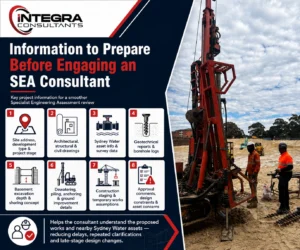
This information helps the engineering consultant understand the relationship between the proposed works and the Sydney Water asset. It also reduces the chance of repeated clarification and late-stage design changes.
What Are Common Mistakes in Specialized Engineering Assessment Projects?
One common mistake is treating the SEA as a final paperwork task rather than an engineering design input. When the assessment is started too late, the project may already include assumptions that are difficult to change.
Another mistake is relying on incomplete ground information. If the geotechnical data is too limited, the assessment may not properly represent settlement risk, groundwater behaviour or soil-structure interaction.
Projects may also face problems when construction staging is unclear. If the engineer does not know how excavation, shoring, dewatering or piling will actually occur, the assessment may not reflect real construction conditions.
A further issue is weak monitoring planning. Monitoring should not simply be added as a generic recommendation. It should relate to predicted movement, asset sensitivity and practical response actions.
Why Choose Integra Consultants for Specialized Engineering Assessment?
Integra Consultants supports SEA projects with geotechnical, civil and structural engineering knowledge. The team works with developers, builders and consultants who need practical engineering solutions for construction near Sydney Water infrastructure.
The company’s capability includes ground movement assessment, numerical modelling, excavation and shoring support, foundation design, ground-improvement input and asset-protection strategy. This makes the SEA process more connected to the real construction risks that affect project delivery.
Integra’s main Specialist Engineering Assessment for Sydney Water Assets service page explains the company’s role in preparing thorough, practical and approval-ready SEA reports.
You can also learn more about the company’s engineering background on the About Integra Consultants page or explore the wider service capability from the Integra Consultants home page.
Final Answer: What Is the Main Value of a Specialized Engineering Assessment?
The main value of a Specialized Engineering Assessment is that it protects existing Sydney Water assets while helping construction projects move forward with clearer engineering control. It identifies how excavation, dewatering, structural loading, ground movement and construction staging may affect nearby infrastructure.
A good SEA does not only describe risk. It gives the project team a practical pathway for managing that risk through design coordination, engineering analysis, asset-protection measures, monitoring and contingency planning.
For developers and builders, this can reduce uncertainty, support approval requirements and help avoid costly construction delays. For asset owners and authorities, it provides confidence that infrastructure risks have been properly reviewed.
If your project is near Sydney Water infrastructure, visit Integra’s Specialist Engineering Assessment for Sydney Water Assets page or contact Integra Consultants to discuss the right SEA approach for your site.
Frequently Asked Questions
What is a Specialized Engineering Assessment?
A Specialized Engineering Assessment is a technical review that assesses how proposed construction may affect nearby infrastructure assets. For Sydney Water projects, it is commonly referred to as a Specialist Engineering Assessment or SEA.
Is Specialized Engineering Assessment the same as SEA?
Yes, in this context, Specialized Engineering Assessment and Specialist Engineering Assessment SEA refer to the same type of asset-protection engineering review. Sydney Water generally uses the term Specialist Engineering Assessment.
When is a Specialized Engineering Assessment required?
It may be required when excavation, dewatering, piling, shoring, loading, vibration or other construction activities occur within the zone of influence of Sydney Water assets.
Why is SEA important for Sydney Water assets?
SEA is important because construction can affect buried water, wastewater or stormwater infrastructure through ground movement, settlement, vibration, groundwater change or structural loading.
Can a geotechnical report replace a Specialized Engineering Assessment?
Not always. A geotechnical report provides important ground information, but a Specialized Engineering Assessment specifically evaluates the impact of construction on nearby Sydney Water assets.
Who prepares a Specialized Engineering Assessment?
A Specialized Engineering Assessment should be prepared by suitably qualified engineering professionals with relevant geotechnical, structural, civil and asset-protection experience.
What services support a Specialized Engineering Assessment?
Ground–structure interaction analysis, excavation and shoring design, dewatering assessment, ground improvement and foundation design can all support the SEA process.
How early should a project team start the SEA process?
The SEA process should ideally begin during design development, before excavation, shoring, foundation and groundwater-control methods are finalised. Early assessment gives the project team more flexibility to manage risk.