

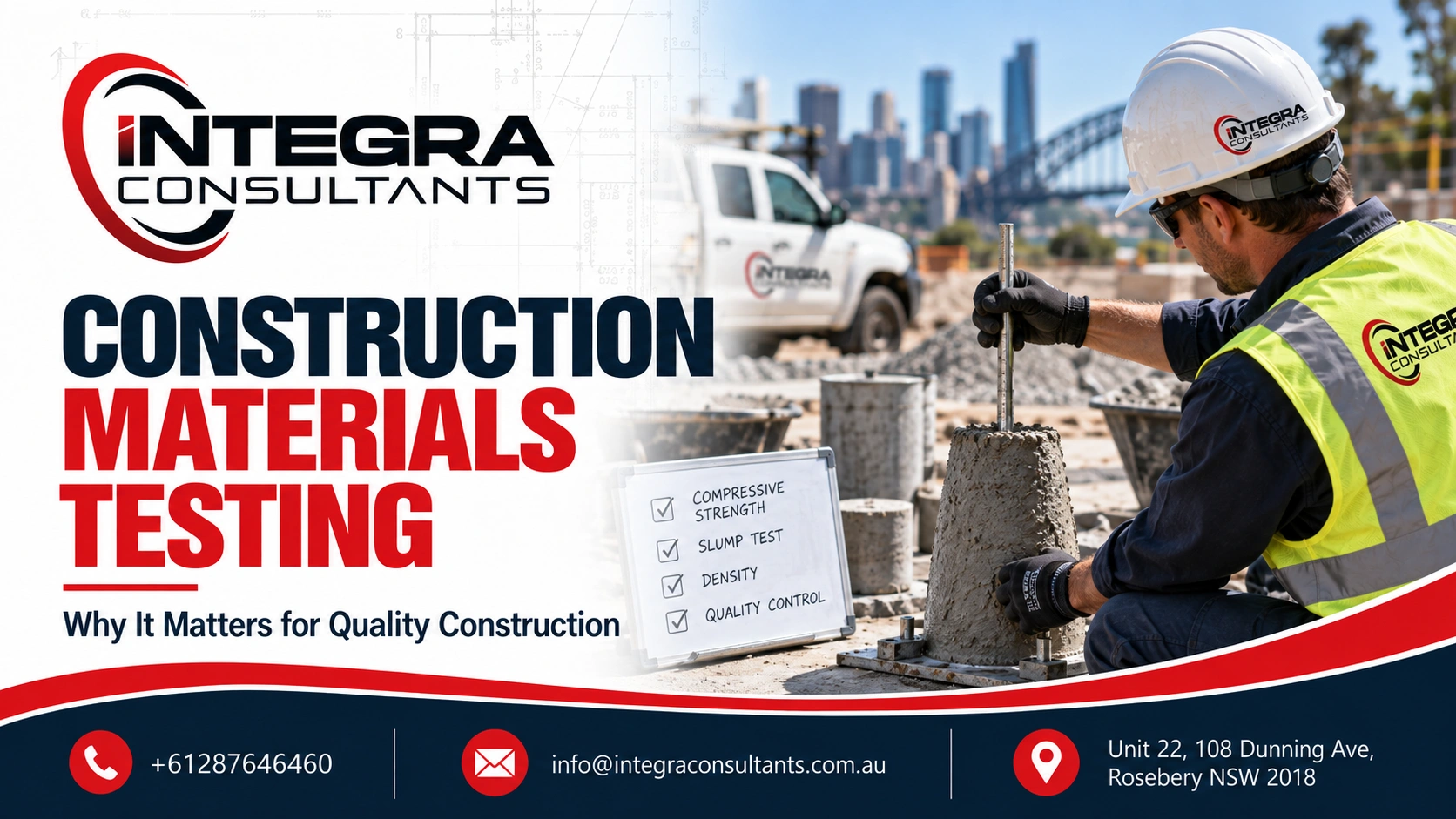
Every successful construction project depends on the quality of the materials used during the building process. From residential developments and commercial buildings to roads, pavements and civil infrastructure, the performance and durability of a structure are directly influenced by whether construction materials meet the required standards.
However, materials cannot always be judged by appearance alone. Soil may look stable but have poor bearing capacity. Concrete may appear strong but fail to achieve the required strength. Aggregates may look suitable but contain properties that affect long-term performance.
This is why construction materials testing plays an essential role in modern construction.
Professional construction materials testing companies assess the quality and performance of materials through laboratory testing and field investigations. These services help builders, engineers, developers and project owners confirm that materials comply with design specifications, safety requirements and industry standards.
For projects across Australia, including Sydney and NSW, construction materials testing provides valuable information that supports quality control, reduces construction risks and helps ensure structures perform as intended.
Integra Consultants provides geotechnical and construction-related testing services to support residential, commercial and civil projects with reliable engineering information and practical recommendations.
What Is Construction Materials Testing?
Construction materials testing is the process of examining and evaluating materials used in construction to determine their physical, chemical and engineering properties.
The purpose of testing is to confirm that materials are suitable for their intended application and meet required specifications.
Construction materials testing may involve assessing:
- Soil quality and strength
- Concrete strength and durability
- Aggregate properties
- Asphalt performance
- Rock characteristics
- Compaction levels
- Pavement materials
- Fill materials
Testing is performed using specialised equipment, laboratory procedures and field testing methods.
The results provide important information for engineers, contractors and project managers to make informed decisions throughout the construction process.
For example:
- Soil testing helps determine whether ground materials can support foundations.
- Concrete testing confirms whether concrete achieves the required strength.
- Compaction testing verifies whether earthworks have been completed correctly.
- Aggregate testing ensures materials are suitable for roads and structural applications.
Rather than relying on assumptions, construction materials testing provides measurable evidence about material performance.
For an educational overview of practical testing methods, MIT OpenCourseWare’s Civil Engineering Materials Laboratory resources include laboratory exercises on concrete properties, compression and indirect tension testing, soil classification and consolidation.
Why Does Construction Materials Testing Matter?
Construction projects involve significant investment, and material failure can result in safety concerns, delays, repairs and increased costs.
Testing helps identify potential problems before they affect the completed structure.
1. Ensures Construction Quality
One of the main reasons for using professional construction materials testing companies is to maintain consistent construction quality.
Construction materials must perform under different conditions, including:
- Heavy loads
- Weather exposure
- Temperature changes
- Moisture variation
- Long-term structural stress
Without testing, there is no reliable way to confirm whether materials meet project requirements.
Testing allows project teams to verify that:
- Materials meet specifications
- Construction processes are performed correctly
- Quality standards are maintained
This is particularly important for large projects where small material variations can affect overall performance.
2. Improves Structural Safety
The safety of any structure depends on the strength and reliability of its materials.
Poor-quality materials may contribute to:
- Structural cracking
- Settlement problems
- Pavement failure
- Reduced durability
- Premature deterioration
Construction materials testing helps identify weaknesses before materials become part of the final structure.
For example:
Concrete testing can confirm whether concrete reaches the required compressive strength.
Soil testing can determine whether foundation materials are suitable.
Compaction testing can verify whether fill materials have achieved the required density.
By identifying issues early, testing helps engineers and builders take corrective action before problems develop.
3. Helps Meet Australian Construction Standards
Construction projects must comply with relevant Australian standards, engineering specifications and project requirements.
Materials testing provides documented evidence that materials meet required criteria.
Testing reports may be required for:
- Building approvals
- Engineering certification
- Quality assurance documentation
- Client requirements
- Civil infrastructure projects
Professional testing companies follow recognised testing procedures to ensure results are accurate and reliable.
4. Reduces Construction Risks and Unexpected Costs
Material-related problems discovered after construction can be expensive to repair.
Examples include:
- Weak concrete requiring replacement
- Poorly compacted soil causing settlement
- Unsuitable aggregates affecting pavement performance
- Failed earthworks requiring reconstruction
Testing materials before and during construction helps identify these issues early.
Although testing represents an upfront project cost, it can prevent significantly larger expenses caused by repairs, delays and redesign.
Types of Construction Materials Testing
Construction materials testing includes a wide range of services depending on the type of project and materials involved.
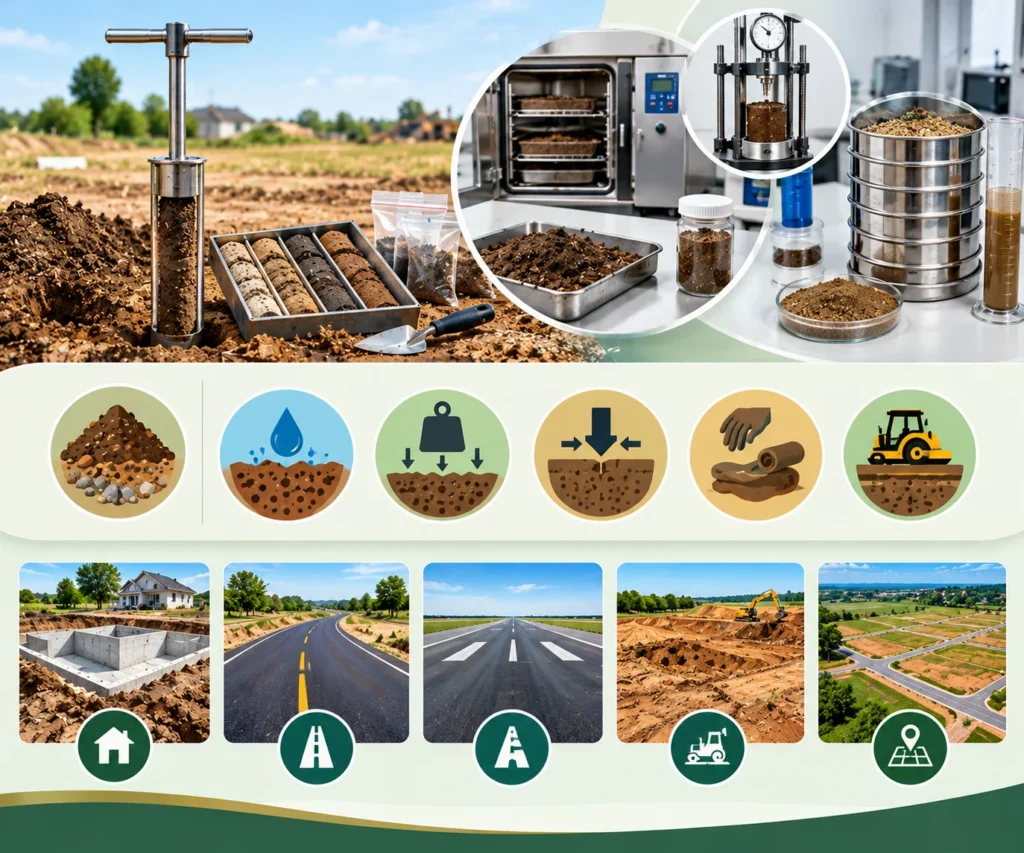
Soil Testing
Soil is one of the most important materials assessed during construction because it provides support for structures.
Soil testing may evaluate:
- Soil classification
- Moisture content
- Density
- Strength
- Plasticity
- Compaction characteristics
Soil testing is commonly required for:
- Building foundations
- Roads
- Pavements
- Earthworks
- Land development
Understanding soil behaviour supports foundation design and helps engineers select suitable construction methods.
Concrete Testing
Concrete is one of the most widely used construction materials worldwide.
Concrete testing helps determine whether concrete achieves the required performance.
Common concrete tests include:
- Compressive strength testing
- Slump testing
- Density testing
- Air content testing
- Durability assessment
Concrete strength results help confirm that structural elements can safely support expected loads.
Aggregate Testing
Aggregates are used in materials such as:
- Concrete
- Asphalt
- Road base
- Pavement layers
Aggregate testing assesses properties including:
- Particle size distribution
- Strength
- Durability
- Shape characteristics
- Resistance to wear
Suitable aggregate selection is essential for long-lasting construction performance.
Asphalt Testing
Asphalt is widely used for roads, car parks, driveways and other pavement applications. The performance of asphalt depends on the quality of its components and how it is produced and installed.
Asphalt testing helps evaluate whether the material is suitable for its intended use.
Common asphalt tests include:
- Asphalt density testing
- Aggregate analysis
- Bitumen content testing
- Stability testing
- Air void testing
- Moisture susceptibility testing
Proper asphalt testing helps ensure pavements can withstand:
- Heavy traffic loads
- Weather conditions
- Temperature changes
- Long-term wear
Poor-quality asphalt or incorrect installation can lead to:
- Cracking
- Rutting
- Surface deterioration
- Reduced pavement lifespan
Testing provides confidence that asphalt materials meet design requirements.
Rock Testing
Rock testing is important for projects involving excavation, foundations, retaining structures and civil construction.
Rock conditions can vary significantly depending on:
- Geological formation
- Weathering level
- Fractures
- Strength characteristics
Rock testing may assess:
- Rock strength
- Rock quality designation (RQD)
- Weathering characteristics
- Durability
- Material suitability
Understanding rock behaviour helps engineers determine:
- Excavation requirements
- Foundation suitability
- Construction methods
- Stability considerations
Compaction Testing
Compaction testing is commonly performed during earthworks and site preparation.
When soil or fill material is placed during construction, it must be compacted properly to achieve the required density and stability.
Poorly compacted materials may result in:
- Settlement
- Cracking
- Uneven movement
- Pavement failure
Compaction testing helps verify whether earthworks have achieved the required standards.
Common methods include:
- Nuclear density testing
- Sand replacement testing
- Moisture-density testing
These tests confirm whether soil has been placed and compacted correctly before construction continues.
Pavement Materials Testing
Roads and pavements must withstand repeated loading from vehicles and environmental conditions.
Pavement materials testing evaluates whether materials are suitable for:
- Roads
- Driveways
- Car parks
- Industrial pavements
Testing may include assessment of:
- Subgrade strength
- Base material quality
- Aggregate properties
- Compaction levels
- Drainage characteristics
Proper pavement testing helps improve durability and reduce maintenance requirements. The results also provide information that supports pavement design.
The Role of Construction Materials Testing Companies
Professional construction material testing companies play an important role in maintaining construction quality from the beginning of a project to completion.
Their responsibilities typically include:
- Collecting material samples
- Performing laboratory testing
- Conducting field inspections
- Analysing test results
- Preparing technical reports
- Providing quality assurance information
Testing companies work closely with:
- Builders
- Engineers
- Contractors
- Developers
- Government authorities
Their findings help confirm that construction materials meet project specifications.
How Construction Materials Testing Supports Quality Construction
Quality construction depends on more than using good materials. Materials must also be appropriate for the specific conditions and installed correctly.
Construction materials testing supports quality through several key areas.
1. Verifies Material Compliance
Construction projects are usually designed according to specific engineering requirements.
Materials testing confirms whether materials comply with:
- Project specifications
- Engineering standards
- Construction requirements
This verification provides confidence that materials are suitable for their intended purpose.
2. Supports Better Construction Decisions
Testing results provide objective information that helps project teams make decisions.
For example:
- Soil test results influence foundation design.
- Concrete results confirm structural strength.
- Compaction results determine whether earthworks are acceptable.
Instead of relying on assumptions, engineers and contractors can make decisions based on measurable data.
3. Improves Quality Control During Construction
Construction materials testing is not only performed before construction begins.
Testing is often carried out throughout the construction process to ensure quality is maintained.
Examples include:
- Testing concrete during placement
- Checking soil compaction during earthworks
- Assessing pavement materials during road construction
Continuous testing helps identify problems before they become major issues.
4. Provides Documentation and Traceability
Construction projects require accurate records to demonstrate quality compliance.
Testing reports provide documentation of:
- Material properties
- Testing dates
- Test locations
- Results obtained
- Compliance status
These records may be valuable for:
- Project handover
- Certification
- Future maintenance
- Quality audits
Construction Materials Testing vs Geotechnical Investigation
Although construction materials testing and geotechnical investigation are closely related, they serve different purposes.
Geotechnical Investigation
A geotechnical investigation focuses on understanding the ground conditions before construction.
It evaluates:
- Soil layers
- Rock conditions
- Groundwater
- Foundation requirements
- Site stability
The goal is to understand how the natural ground will behave under construction loads.
Construction Materials Testing
Construction materials testing focuses on verifying the quality and performance of materials used during construction.
It evaluates:
- Concrete
- Soil fill
- Aggregates
- Asphalt
- Pavement materials
The goal is to confirm that construction materials meet required standards.
In many projects, both services work together.
For example:
A geotechnical investigation may determine the required foundation design, while materials testing confirms that the concrete, soil and pavement materials used during construction meet specifications.
When Do You Need Construction Materials Testing?
Construction materials testing may be required for a wide range of projects, including:
Residential Construction
Testing may be required for:
- New homes
- Extensions
- Driveways
- Retaining walls
Testing helps confirm that foundations and earthworks are suitable.
Commercial Buildings
Large developments often require detailed testing because of:
- Higher structural loads
- Complex construction requirements
- Strict quality standards
Civil Infrastructure Projects
Materials testing is essential for:
- Roads
- Bridges
- Drainage systems
- Public infrastructure
These projects require materials capable of handling significant loads and long-term exposure.
Land Development Projects
Developments involving major earthworks require testing to confirm:
- Fill quality
- Soil compaction
- Pavement suitability
- Ground preparation
Benefits of Hiring Professional Construction Materials Testing Companies
Choosing experienced testing professionals provides several advantages.
1. Reliable and Accurate Results
Professional testing companies use appropriate equipment, procedures and technical expertise to provide reliable results.
Accurate testing helps prevent incorrect decisions based on assumptions.
2. Reduced Project Risk
Testing identifies potential material issues before they affect construction.
This helps reduce:
- Delays
- Rework
- Unexpected expenses
- Structural problems
3. Improved Construction Durability
Using properly tested materials contributes to stronger and longer-lasting structures.
Quality testing supports better performance throughout the life of the project.
4. Better Communication Between Project Teams
Testing reports provide a common technical reference for:
- Engineers
- Contractors
- Builders
- Developers
This improves communication and helps ensure everyone understands material performance requirements.
How to Choose the Right Construction Materials Testing Company
Selecting the right testing provider is important because the quality of testing directly affects construction decisions.
Consider the following factors:
Experience and Technical Expertise
Choose a company with experience in projects similar to yours.
A provider familiar with local conditions can better understand common challenges.
Range of Testing Services
A suitable company should offer the testing services required for your project, such as:
- Soil testing
- Concrete testing
- Aggregate testing
- Pavement testing
- Compaction testing
Clear Reporting
Testing results should be presented clearly and include:
- Test methods
- Results
- Interpretation
- Compliance information
Understanding of Local Requirements
Construction requirements can vary between regions and authorities.
A local testing company understands relevant standards and project expectations.
Frequently Asked Questions
What do construction materials testing companies do?
Construction materials testing companies evaluate construction materials such as soil, concrete, asphalt and aggregates to confirm they meet required quality and performance standards.
Why is construction materials testing important?
Testing helps ensure materials are safe, suitable and durable. It reduces construction risks and helps prevent failures caused by poor-quality materials.
Is construction materials testing required for every project?
The level of testing depends on the project type, size and requirements. Larger developments and civil projects usually require more extensive testing than small residential projects.
What materials are commonly tested during construction?
Commonly tested materials include:
- Soil
- Concrete
- Asphalt
- Aggregates
- Rock
- Fill materials
How does materials testing improve construction quality?
Testing provides measurable information about material performance, allowing engineers and contractors to confirm that construction meets design requirements.
Conclusion: Why Construction Materials Testing Matters
Quality construction begins with confidence in the materials being used.
From foundations and earthworks to concrete structures and pavements, every construction material plays an important role in the safety, durability and performance of a project.
Professional construction materials testing companies provide essential services that help verify material quality, identify potential issues and support better construction decisions.
By testing materials throughout the construction process, project owners, engineers and builders can reduce risks, improve quality control and create structures that perform reliably for years.
Integra Consultants provides professional geotechnical and construction testing services across Sydney and NSW. Our team supports residential, commercial and civil projects with accurate testing, engineering assessment and practical recommendations.
Whether you are planning a new development, infrastructure project or construction upgrade, our team can help ensure your materials meet the required standards.
Contact Integra Consultants to discuss your construction materials testing requirements.
Visit us: Unit 22, 108 Dunning Avenue, Rosebery NSW 2018
Call: +61 2 8764 6460
Email: info@integraconsultants.com.au


